Healthcare is evolving beyond traditional face-to-face consultations. As patients seek more convenient and accessible healthcare experiences, primary care and specialist clinics are exploring telemedicine and telehealth to stay connected beyond the physical clinic environment.
However, supporting digital healthcare services requires more than virtual consultations. Clinics need connected workflows that bring together appointments, patient information, communication, and daily operations. A reliable clinic management system in Malaysia helps clinics adapt to this changing healthcare landscape while creating a smoother experience for both healthcare teams and patients.
Telemedicine refers to the delivery of healthcare services remotely through digital technology. This includes virtual consultations, follow-up appointments, and medical advice without requiring patients to visit the clinic in person.
Telehealth refers to the broader use of digital solutions to support the healthcare journey. Beyond remote consultations, it includes online appointment booking and scheduling, electronic health records, and other processes that help clinics stay connected with patients and manage care more efficiently.
Patients today expect healthcare services to be more convenient, accessible, and flexible. Telemedicine and telehealth allow general practitioner (GP) clinics, specialist clinics, and family clinics to provide care beyond traditional face-to-face consultations.
To support this hybrid healthcare model, a connected clinic management system in Malaysia helps clinics streamline operations across both physical and digital care channels.

Without a clinic management system, clinics often rely on multiple disconnected tools for teleconsultations, appointment management, patient records, and clinical documentation.
This becomes even more challenging when clinics need to coordinate both virtual and in-person consultations.
By bringing all workflows together in one connected platform, clinics can deliver a seamless patient journey while efficiently supporting both virtual and in-person care.
When clinics offer both physical and remote consultations, appointment scheduling becomes more complex. A clinic management system simplifies scheduling, maintains a clear overview of daily bookings, and automates reminders to reduce no-shows. This helps clinics manage consultations more efficiently.
During teleconsultations, doctors can quickly access comprehensive patient profiles containing medical records, consultation history, and previous case notes in one place. They can review patient information and record treatment notes directly within the same platform, keeping records up to date and easily retrievable.
Once the consultation is completed, prescriptions can be synchronised with the medication dispensing process to support faster preparation for patient pickup or delivery.
A clinic management system helps clinics stay connected with patients beyond consultations through automated follow-ups and reminders. Instead of manually contacting patients about revisit appointments or medication refills, clinics can schedule timely reminders to encourage return visits and support treatment adherence.
Read More: kumoDoc™ Online Booking Benefits: The Ease of Booking Treatments Online with Your Favourite Clinic

Effective teleconsultations require more than just video consultations. Clinics need a connected clinic management system that integrates all workflows, including appointments and patient records, to support seamless telehealth and telemedicine services.
Designed for modern clinics, kumoDoc™ helps primary care and specialist clinics manage both virtual and in-person care more efficiently through one connected platform.
Book a FREE demo today or contact us to discover how kumoDoc™ can support your clinic's digital healthcare journey and help you streamline daily operations.
Managing operations across multiple clinic branches requires effective coordination and clear visibility of daily activities. As organisations expand their services to additional locations, maintaining consistency in administrative processes, patient information, inventory management, and staff scheduling becomes increasingly important.
Without a centralised system, overseeing activities across different branches can become more time-consuming and complex. Maintaining accurate and up-to-date information across all locations is also essential for supporting efficient operations and consistent service delivery.
A clinic management system can help address these requirements by bringing key operational functions together within a single platform. This supports greater coordination between branches, improves access to information, and enables clinics to manage multi-branch operations more effectively.
Expanding to multiple clinic branches creates new operational demands. As the number of locations increases, maintaining efficiency, consistency, and effective communication across every branch becomes more challenging.
Managing patient records across multiple clinic branches can be challenging without a centralised system. When patient histories, treatment plans, and package redemptions are stored separately, inconsistencies may arise, making it harder to deliver coordinated and uninterrupted care.
Access to patient medical history is essential when providing treatment across different dental branches. When records are not immediately available, dentists may require additional time to review previous information before continuing care. This can affect the smooth flow of consultation and the patient’s overall experience.
Keeping inventory organised across multiple clinic branches can quickly become overwhelming. When stock is managed separately at each location, it becomes difficult to maintain accurate inventory records, prevent shortages, and ensure supplies are available where they are needed.
When inventory is managed independently across branches, surplus supplies may remain unused at one location while another runs low on essential items. These inefficiencies increase operational costs, contribute to stock wastage, and can disrupt daily clinic operations.
Effective workforce scheduling is essential for maintaining efficient operations across multiple clinic branches. Without a coordinated scheduling approach, allocating staff to meet operational demands at each location can become more challenging, increasing the risk of scheduling conflicts and uneven workforce distribution.
Fragmented operational processes can lead to delays in service delivery, an uneven distribution of staff workloads, and reduced employee satisfaction. Ineffective coordination also has a direct impact on the patient experience, potentially resulting in lower satisfaction levels and damaging the clinic's reputation for delivering timely and high-quality healthcare services.

Challenges in managing multiple clinic branches can be addressed with a robust clinic management system that provides tools to support smoother and more efficient operations across all locations:
A clinic management system centralises patient records within a single database, allowing authorised healthcare professionals to access up-to-date information from any clinic branch. Having patient records readily available supports informed clinical decision-making and helps ensure continuity of care, regardless of where patients receive treatment.
A clinic management system ensures continuity of care by maintaining accurate and complete patient records across all outlets. This allows patients to receive treatments or consultations at any location without delays or inconsistencies in their information, while also reducing errors and improving overall service quality.
Maintaining accurate inventory information across multiple GP clinic branches is essential for ensuring the continuous availability of medicines and medical supplies. A clinic management system provides a centralised view of inventory data, enabling clinics to monitor stock levels, facilitate timely replenishment, and allocate medical supplies based on the operational needs of each branch.
Improved visibility of inventory enables GP clinics to allocate medical supplies more effectively across branches. By avoiding duplicate purchases and reducing excess stock, clinics can make better use of available resources, control operational expenses, and support smoother daily operations.
A Clinic Management System (CMS) helps clinics maintain operational consistency by centralising workflows across multiple outlets. This enables staff to perform daily tasks using the same process, helping to minimise differences in how operations are carried out and improving overall service quality.
Read More: Are You Implementing the Right Clinic Management Software for Your Business?
Expanding to multiple clinic branches doesn't have to increase operational complexity. kumoDoc™ helps you streamline processes, standardise workflows, and gain real-time visibility into every aspect of your clinic operations.
Contact us today and book a demo to discover how kumoDoc™ can help streamline multi-branch operations and support your clinic’s growth.
System storage limitations can create challenges for GP clinics as the number of patient records, diagnostic images, and administrative documents continues to grow. When storage capacity becomes limited, accessing and managing important information can become more difficult and time-consuming.
To effectively manage increasing volumes of clinical data, GP clinics require a system that supports structured and secure information handling. A cloud-based clinic management system enables the consolidation of medical records into a single platform, improving data organisation, ensuring timely access to important information, and supporting more efficient clinical workflows.
As GP clinics expand, the growing volume of patient records, diagnostic images, and operational documents requires greater storage capacity. This increased demand often leads to additional investment in storage infrastructure, which can raise overall operational costs and place added pressure on clinic budgets.
As storage demands increase, system performance may be affected, resulting in slower access to patient records and other important documents. This can make routine tasks more time-consuming and impact the smooth running of clinic operations.
When system delays affect administrative tasks, they ripple out to your patients as well. Longer wait times and delays in accessing their records or reports can result in dissatisfaction, as patients rightfully expect smooth and efficient service from your clinic.
Read More: Enhance Clinic Operations with Effective Inventory Management!

A cloud-based clinic management system reduces the need for costly hardware upgrades or additional storage purchases by offering a scalable and efficient alternative. This solution helps optimise your budget, freeing up resources for other priorities.
When storage capacity becomes limited, system performance may be affected, making it more difficult to access patient records, diagnostic images, and other important information promptly. A cloud-based clinic management system helps address these challenges by providing real-time updates, secure file storage, and reliable access to information whenever it is needed.
Unlimited storage simplifies organising and accessing records, photos, and documentation. Staff can quickly retrieve the information they need without dealing with fragmented storage systems or juggling between multiple platforms to locate files.
Read More: kumoDoc™ Online Booking Benefits: The Ease of Booking Treatments Online with Your Favourite Clinic
With our clinic management system, GP clinics can manage patient records, diagnostic images, and operational documentation without worrying about system storage limitations. The unlimited storage feature helps ensure that important information is stored securely and can be accessed at anytime, anywhere.
This not only reduces costs associated with hardware upgrades but also enhances efficiency by streamlining workflows and eliminating bottlenecks caused by storage constraints. Key benefits of our clinic management system include:
Discover how unlimited system storage can help streamline your clinic’s data management and daily operations. Schedule a demo to learn how kumoDoc™ can support your clinic.
Imagine this: you’re managing a busy GP clinic on a Monday morning. The front desk staff are rushing to manage appointments using a slow and outdated clinic management system while trying to locate patient medical records.
Patients in the waiting area grow increasingly frustrated as delays continue to build. At the same time, the healthcare team struggles to navigate disorganised files, wasting valuable time that could be better spent providing quality patient care.
This situation is common for clinics relying on outdated systems, and it can affect more than just daily operations it may also impact patient experience and your clinic’s professional reputation. Let’s explore how outdated clinic management systems can disrupt daily operations and how the right solution can support smoother clinic workflows.
1. Missed Appointments and Booking Issues
A poorly designed clinic management system may lack proper scheduling features, leading to double bookings, missed appointments, or long waiting times for patients trying to secure an appointment.
These issues can frustrate patients, create delays in daily clinic operations, and affect the overall patient experience, making it more difficult for clinics to maintain smooth and organised workflows.
2. Billing Headaches
Billing issues are another common problem caused by outdated clinic management systems. Manual or traditional billing processes may lead to:
3. Unreliable Data Storage
Outdated systems also often suffer from limited, unreliable storage. This makes accessing historical patient data and healthcare records a cumbersome process to more difficult and time-consuming, and worse, increases the risk of data loss.
With modern clinics required to meet strict data protection regulations, failing to secure patient information could also have compliance risks.
Read More: Are You Implementing the Right Clinic Management Software for Your Business?

These operational issues can be improved with a clinic management system designed to support your clinic’s daily operations.
Implementing the right system can help support smoother workflows, better appointment management, and more organised clinic operations.
4. Online Booking and Scheduling
A quality clinic management system enables seamless online booking, allowing patients to arrange appointments based on their preferred time slots.
Automated reminders help reduce missed appointments, while a centralised calendar allows clinic staff to organise and manage appointments more effectively.
5. Efficient Billing
Modern clinic management systems help streamline billing processes through accurate invoicing, simplified payment tracking, and integration with digital payment methods. This reduces administrative errors, improves billing coordination, and supports a smoother payment experience for both clinic staff and patients.
6. Reliable, Secure Data Storage
Advanced clinic management systems also offer secure data storage with reliable accessibility. This allows clinics to access patient records, reduce the risk of data loss, and support data privacy and security requirements for safer record management.
Investing in a comprehensive CMS also delivers benefits that extend far beyond immediate operational improvements:
1. Enhanced Patient Satisfaction
Faster service and fewer errors lead to improved patient retention and a better patient experience who are more likely to return and recommend your clinic.
2. Optimised Staff Productivity
Automation also reduces repetitive tasks, freeing your staff to focus on providing quality patient care.
3. Scalability
As your clinic grows, a reliable clinic management system can scale with your operations, accommodating more patients, clinic staff, and patient records while maintaining smoother daily workflows.
Read More: Enhance Clinic Operation with Effective Inventory Management!

Deciding to switch to a reliable CMS can redefine how your clinic operates. It’s not just about improving current operational challenges; it’s about positioning your clinic for future growth and excellence.
Now, your clinic is where appointments are managed more efficiently, bills are processed smoothly, and patient medical records are securely stored and easily accessible.
Don’t let a bad CMS hold your clinic back. Discover how kumoDoc™ clinic management software can streamline your operations and elevate patient satisfaction.
With its cutting-edge Advanced features, your clinic can achieve operational excellence and provide a superior patient experience. your clinic can achieve operational excellence and provide a superior patient experience.
Contact us today to see the difference a quality clinic management software can make. It’s time to give your clinic the tools it deserves.
Healthcare providers often manage a high volume of patient appointments daily, making efficient scheduling important for maintaining smooth daily operations. However, scheduling gaps, missed appointments, and long waiting times can quickly disrupt workflows and affect the overall patient experience.
When appointment management becomes difficult, staff may face overcrowded schedules, delayed consultations, and inefficient resource allocation. These challenges can reduce operational efficiency while affecting patient satisfaction and continuity of care.
Fortunately, improving appointment scheduling with the right digital solutions can help healthcare practices create more organised workflows and support smoother daily operations.
Inefficient appointment scheduling can contribute to extended waiting periods for patients, particularly during peak consultation hours. Delays in one appointment may affect the rest of the clinic’s schedule, creating frustration for patients and increasing pressure on healthcare staff.
Long waiting times may also affect patient confidence in the clinic’s ability to deliver timely and organised care. In busy medical environments, maintaining an efficient appointment flow is essential for improving both patient satisfaction and operational stability.
Missed appointments can disrupt scheduling coordination and affect both clinic productivity and patient flow. Patients may forget upcoming consultations, experience changes in their schedules, or delay visits without timely reminders.
For healthcare practices, these scheduling gaps can lead to underutilised consultation slots, workflow disruptions, and reduced operational efficiency throughout the day.
Scheduling inefficiencies can make it difficult for healthcare practices to fully utilise consultation rooms, employees, and available appointment slots. Last-minute cancellations or unfilled schedules may lead to downtime that affects overall operational productivity.
Manual scheduling processes may also create imbalances in workload distribution, where some staff members manage overwhelming patient volumes while others remain underutilised. Over time, these inefficiencies can affect workflow coordination and patient experience.
Read More: Minimising Employee Turnover with a Reliable Clinic Management System

Online appointment booking provides patients with a more convenient and accessible way to schedule medical consultations. Through a user-friendly booking interface, patients can view available appointment slots, select preferred consultation times, and manage bookings more efficiently without relying solely on phone calls.
This helps medical clinics reduce administrative workload while improving scheduling coordination and accessibility for patients.
Automated reminders help maintain more organised appointment schedules by keeping patients informed about upcoming consultations and follow-up visits. Notifications sent through SMS, email, or messaging platforms can help reduce forgotten appointments, improve attendance rates, and support better scheduling coordination.
By reducing missed consultations and scheduling disruptions, practices can maintain smoother patient flow and improve overall daily operations.
Real-time slot management helps maintain more accurate and flexible appointment schedules throughout the day. When appointments are cancelled or rescheduled, available consultation slots can be updated immediately to accommodate other patients.
This helps reduce scheduling gaps, improve resource utilisation, and support better coordination between staff and patients.
Read more: Are You Implementing the Right Clinic Management Software for Your Business?
Combining automated reminders with convenient online scheduling can help medical clinics reduce missed consultations and maintain more consistent appointment attendance. This allows clinics to minimise operational disruptions while supporting steadier patient flow throughout the day.
Clear and consistent communication plays an important role in strengthening patient trust and improving the overall healthcare experience. Timely appointment updates, reminders, and follow-up notifications can help patients feel more informed, supported, and engaged throughout their care journey.
Follow-up care plays an important role in supporting ongoing patient treatment and monitoring recovery progress. Appointment management systems can help organise follow-up consultations, send reminders for future visits, and improve communication to support continued patient care.
Read More: How to Improve Appointment Scheduling Efficiency in Medical Clinics

Designed to support modern healthcare practices, kumoDoc™ provides medical clinics with tools to streamline appointment scheduling, improve patient communication, and support more efficient clinic operations.Our key features include:
Online Appointment Booking
Allow patients to select their preferred visit date and time through a convenient online booking platform.
Automated Appointment Reminders
Minimise missed appointments and last-minute rescheduling through automated reminders and notifications.
Real-Time Scheduling Management
Manage appointment changes, cancellations, and scheduling updates more efficiently.
Book a demo today and discover how can help improve appointment scheduling, streamline patient management, and support smoother daily operations.
A patient management system helps primary care and specialised clinics organise patient information by storing medical histories, appointments, and treatment plans digitally in one system. This makes accessing records faster and more accurate.
Nevertheless, patient record management can be a daunting task for doctors and clinic staff, especially when dealing with an overwhelming number of patients daily.
For those in specialised fields, such as Obstetrics and Gynaecology, Ophthalmology, and Paediatrics, the challenge of keeping track of records while delivering top-quality care can create serious bottlenecks.
As the number of patients grows, so does the risk of cluttered and disorganised records.
Doctors often spend a lot of time looking for and updating individual patient files, which makes people wait longer and lowers the overall quality of patient care.
Long waiting lines also pressure clinic staff to find information hastily without careful consideration, increasing the likelihood of missing important details.
In short, having an outdated or messy patient management system isn’t just a hassle; it can compromise the quality of care provided.
But what if there was a solution made just for you? Let’s explore further!

Picture this: you're an ophthalmologist seeing your twentieth patient of the day.
As you hurriedly note down the patient’s condition, you notice that you’re already running behind schedule. The waiting area is packed, and the growing restlessness among patients only adds to the pressure.
Sound challenging? That's because it is!
Primary care and specialised clinics encounter distinct hurdles when managing patient records. Here are some of the most common ones:
Clinic physicians often see a high volume of patients daily, each requiring detailed, speciality-specific documentation. This high volume can quickly lead to information overload.
Specialised clinics also involve dealing with specialised cases. For instance, an obstetrician needs to track a pregnancy's progress over months, including numerous test results and potential complications.
These complex cases demand intricate, precise record-keeping that general patient management systems often can't accommodate.
Furthermore, the pressure to see more patients can lead to rushed, incomplete, or inaccurate records. But why is this a problem?
Incomplete records can lead to misdiagnosis, inappropriate treatment, or missed follow-ups.
Finally, standard EHR templates often fall short of specialised practices. For instance, an ophthalmologist needs fields for visual acuity and intraocular pressure, while a paediatrician requires growth charts and vaccination records.
Customising standard EHR templates to fit these specific needs is time-consuming and takes away valuable hours that could be spent attending to patients.
Read More: Are You Implementing the Right Clinic Management Software for Your Business?

kumoDoc™ electronic health record (EHR) is your answer to streamlined, efficient patient record management! It has been designed with the unique needs of specialised medical practices in mind.
As you conduct your consultation, kumoDoc™ presents you with relevant fields and options, allowing you to input data quickly and accurately.
The system's intuitive design means that as you examine and discuss with your patient, you can effortlessly input:
This information is instantly integrated into the patient's comprehensive profile, creating an easily accessible medical history.
Read More: Strengthen Your Clinic Identity with the Right Clinic Management System
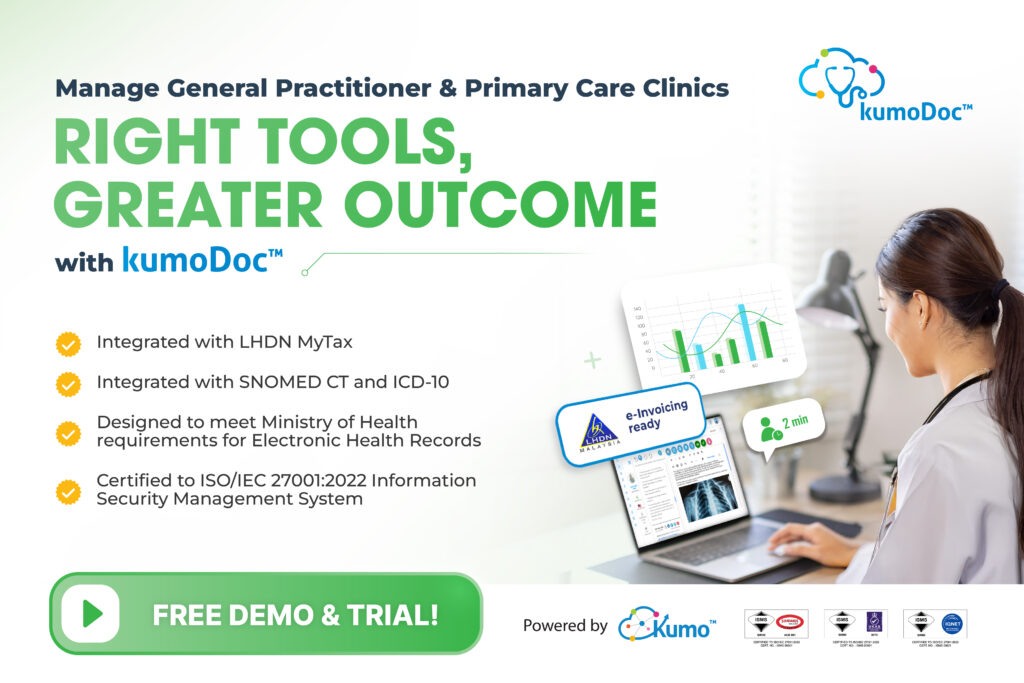
In a world and field where every minute counts, let kumoDoc™ patient management system be the partner that helps you make the most of your time, skills, and passion for healthcare.
Book a demo of kumoDoc™ patient management system for your particular speciality today, and experience firsthand how an all-in-one patient management system can revolutionise your specialised clinic operations.
From streamlined record-keeping to efficient appointment scheduling, kumoDoc™ is designed to enhance every aspect of your clinic practice.
The future of efficient, patient-centred care is here – are you ready to stay ahead of the curve and transform your clinic practice?
What is e-Invoice? e-Invoicing (short for electronic invoicing) is more than just sending a digital bill.
It’s a structured way of creating, submitting, and managing invoices through an online system that links directly to the Inland Revenue Board of Malaysia (LHDN). It’s not just a PDF sent by email; it’s a full digital record that’s verified and tracked.
With Malaysia rolling out mandatory e-Invoicing in phases from 2024 to 2027, clinics and businesses of all sizes will soon have to switch from traditional invoices to this new method.
A proper clinic management system is key — one that’s simple, fast, and reliable. Otherwise, what should be a time-saving tool can quickly turn into a daily headache.

When submitting an e-Invoice, the approach can vary based on your clinic’s operations and the number of patients you serve.
Let’s take the setting of a primary care or specialist clinic for example. Here’s how it typically works:
For treatments that span multiple sessions, such as physiotherapy, prenatal check-ups, or rehabilitation programs, the clinic may issue a consolidated e-Invoice once the full package is completed. This allows all sessions to be captured under a single invoice for easier reference and processing.
For single-visit treatments like vaccinations, health screenings, or minor outpatient procedures, the client may request an invoice immediately after payment.
In this case, the clinic selects the Individual Submission Method to generate and send an e-Invoice specifically for that visit.
After submission through the clinic’s system, the e-Invoice is automatically sent to LHDN’s MyInvois platform. The invoice is verified in real time, without the need for manual uploads or additional steps by the clinic staff.
Once the invoice is approved, the patient receives a digitally verified e-Invoice with a QR code via email or printed copy.
This code confirms that the invoice is legitimate and accepted by LHDN—helpful for patients who need proof of transaction for financing, tax claims, or post-treatment follow-ups.
Read More: Why is e-Invoicing Crucial for Medical Clinics? Discover 5 Key Facts

Submitting e-Invoices manually may seem like a straightforward task. However, it can occupy a lot of valuable time particularly in a fast-paced clinic environment. Many clinic management systems (CMS) are still dependent on manual processes, which means:
kumoDoc™ does things differently—and that’s where your primary care or specialist clinic gains the edge.
Unlike most CMS platforms, kumoDoc™ automates the entire e-Invoicing process. No exporting. No switching platforms. No repetitive data entry.
From invoice creation to LHDN submission and QR code generation, everything happens in one place, with just a click.
With kumoDoc™ CMS, you get a fully integrated system that connects directly to LHDN. Here’s what that means for your primary care or specialist clinic:
In short, kumoDoc™ removes the hassle from e-Invoicing and lets you focus on running your primary care or specialist clinic.
Read More: kumoDoc™ Online Booking Benefits: The Ease of Booking Treatments Online with Your Favourite Clinic

kumoDoc™ is more than just an e-invoicing tool. Built specifically for primary care and specialist clinics, it unifies patient care, business operations, and compliance into one smart platform. That means:

e-Invoicing is here to stay, and the right system makes all the difference. Don’t let your primary care or specialist clinic get stuck in time-consuming manual processes.
Choose kumoDoc™—the all-in-one clinic management system trusted by over 2,000 clinics. Alongside seamless e-Invoicing, kumoDoc™ offers everything from appointment scheduling and electronic medical records to billing and inventory management.
Let us help you save time, cut down on errors, and give your patients the fast, modern service they deserve.
Ready to simplify your primary care or specialist clinic’s operations? Get in touch with us today for a free demo!

At Kumo™, we’re proud to announce a significant achievement in our journey—we are now officially ISO/IEC 27001:2022 (Information Security Management System) certified!
This achievement marks a proud moment for our team, reflecting our continued commitment to data security and service excellence.
Becoming ISO/IEC 27001:2022 certified is no small feat. It’s the result of careful planning, hard work, and dedication from every corner of our team.
As shared in our LinkedIn announcement, this journey brought our team closer together, aligning everyone on a shared purpose: to make Kumo™ even more trustworthy, secure, and ready for the future.
We're especially honoured to be the first Primary Care and Specialist Clinic Management Software in Malaysia to receive this recognition.
What truly makes this achievement meaningful is the value it brings to your primary care and specialist clinic business:
Since day one, our mission has been to provide more than just a comprehensive CMS; we aim to offer peace of mind to every business that depends on us.
Earning this certification is a testament to the strength of our systems and processes, proving they meet the highest standards in information security.
Read More: Are You Implementing the Right Clinic Management Software for Your Business?

Now, let’s talk about what this means for you, our customers and partners.
When you choose Kumo™ as your clinic management system or any of our other solutions, you’re not just choosing convenience or ease of use. You’re choosing a partner that takes security seriously.
Here’s how this benefits your primary care or specialist clinic:
.jpg?csf=1&web=1&e=txY4FK)
Our certified systems are designed to spot and manage potential security risks before they affect your primary care or specialist clinic.
Whether you’re logging in to access appointments, managing online forms, or using the system remotely, you can do so knowing your data is shielded from modern cyber threats.
From patient records and treatment notes to billing reports and staff information, everything stored in Kumo™ is protected with strict access controls, encryption, and real-time monitoring. This keeps your most sensitive data safe even behind the scenes.

Being ISO/IEC 27001:2022 certified means we comply with internationally recognised standards. You can reassure your clients that their personal data is managed according to the same level of care used by global primary care and specialist clinic professionals.
This certification isn’t a one-time effort; it ensures we regularly review, audit, and upgrade our security practices. That means you benefit from ongoing improvements without having to lift a finger.

Whether you're handling patient consent forms or managing financial transactions, our certified processes help your primary care and specialist clinic stay aligned with data protection laws—giving you fewer compliance worries.
In every part of the system, from online bookings to digital forms, your clients trust you with their personal details. We help you honour that trust by handling their information with integrity and care every step of the way.
Read More: Strengthen Your Clinic Identity with the Right Clinic Management System
Our ISO/IEC 27001:2022 certification is just one way we’re raising the standard in primary care and specialist clinic technology.
With Kumo™, you’re getting more than just a system to manage appointments and reports. You’re getting an all-in-one solution trusted by over 2,000 clinics that’s designed to simplify daily operations while keeping everything secure.
Whether you run a family & paediatrician clinic, obstetrics & gynaecology clinic, or ophthalmology clinic, Kumo™ has everything you need—patient records, inventory, loyalty programmes, reporting, and more—all under one roof.
And now, with certified security practices behind it, it’s an even safer bet for your primary care and specialist clinic business.
Read More: Enhance Clinic Operations with Effective Inventory Management!

If you’re already with us, thank you for trusting Kumo™. We remain committed to improving our services, strengthening our security, and supporting your business growth with our all-in-one clinic management system.
If you’re exploring your options, now is the perfect time to make the switch. Let Kumo™ be your secure, all-in-one solution for digital primary care and specialist clinic management.
Contact us to schedule a demo today.